
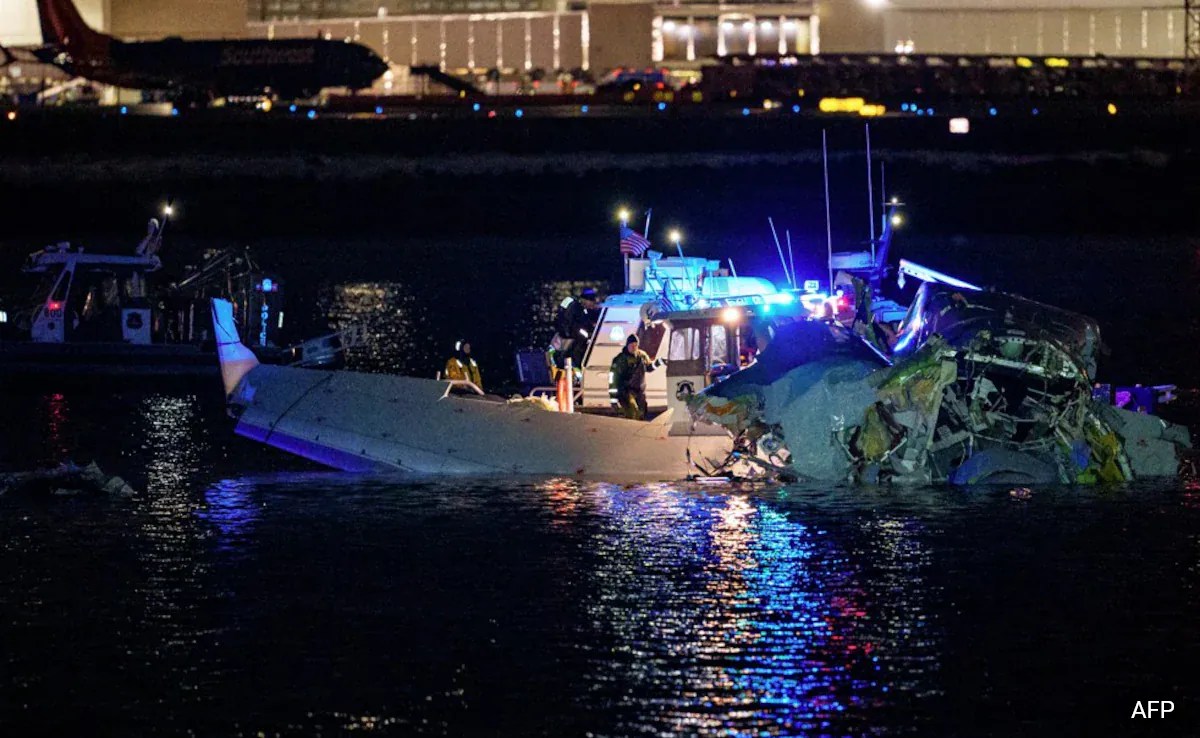
The tragic plane crash in Washington DC, among other events in the news, can offer an opportunity for educators to engage high school ELLs and adult English learners. These real-world headlines can help with building essential language skills. Current events can serve as a springboard for teaching new vocabulary, particularly in areas such as geography, directionality, and safety terminology. One key area that can be effectively explored is directional language—specifically prepositions, location descriptors, and altitude terms—which are critical to everyday communication but often challenging for newcomers. In the case of the DC tragedy, the very nature of this shocking story conjures interest, in a sad sense, and since the story and its victims hold students’ attention, it presents an opportunity to teach new terms and engage them in worthwhile conversations.
Prepositions of Place and Location
In the aftermath of the helicopter and plane crash, much of the language used to describe the event revolves around location: where the crash happened, where rescue operations occurred, and the relative positioning of the wreckage. These settings provide situational context to teach prepositions. For English learners, understanding prepositions like “above,” “below,” “near,” “in,” “on,” “to the left of,” and “next to” is crucial for describing not only physical spaces but also abstract concepts.
For example, after a crash, reports describe how the wreckage was found “in the water of the Potomac River,” “near a very busy international airport,” and “on the outskirts of the capital.” These phrases provide opportunities for ESL instructors to introduce and reinforce the use of prepositions of place. Creating simple exercises, such as giving learners a map of the crash site or a diagram of a plane and its surroundings, can encourage them to use these prepositions accurately in context.
The words “left,” “right,” “up,” and “down” form the core of basic directional vocabulary. In the context of a plane crash, directions are critical for understanding emergency procedures, coordinating rescue efforts, or simply following a news report. As part of a lesson plan, teachers can use flight paths, crash site coordinates, and even airplane diagrams to show the spatial relationships between the crash, nearby areas, and points of interest like airports or hospitals. Students can then practice using directional language by describing the movements of the aircraft before and after the crash: “The plane was descending,” “The crash occurred to the south of the airport,” or “Rescue teams moved to the north of the site.” Simple questions like “Is the wreckage to the right or left of the runway?” or “Where is the crash in relation to the city center?” can be used to engage students in real-world situations while reinforcing their understanding of directional vocabulary –not to mention become more familiar with landmarks.
Altitude and Elevation Terminology
When discussing plane crashes, altitude plays a significant role, both in the cause of the accident and in the emergency response. For English learners, vocabulary related to elevation such as “above,” “beneath,” “high,” “low,” and specific terms like “ascent” and “decline” are crucial in understanding the dynamics of aviation. These words are not only important for discussing the crash itself but also for understanding safety instructions, geographical descriptions, and emergency response measures.
Introducing terms like “at an altitude of 10,000 feet,” “the plane was descending to a lower elevation,” or gives students the opportunity to learn not just about geography but also about the technical language used in aviation. Teachers can provide visuals of altitude readings on a plane’s instrument panel, terms like “sea level,” or aerial maps to help students understand these concepts more clearly. Incorporating activities that involve students discussing the plane’s altitude changes before and after the crash can further reinforce these terms. You might ask questions like, “How do you think the plane’s altitude affected the crash site?” or “Was the plane flying high or low when the accidentoccurred?”
Incorporating Critical Thinking and Cultural Sensitivity
It’s also essential to approach sensitive topics like tragedies with care and empathy. While using the Washington DC plane crash as a teaching opportunity, it’s important to consider the emotional impact of such events on both students and their families. This is why (in my professional opinion) using this story to help build vocabulary skills is better suited for older English learners like high schoolers and adults, especially those mature enough to handle a severe, critical situation like that of this topic. Encourage discussions on how people respond to tragedies, focusing on themes like resilience, compassion, and community support. After all, there were several victims of this crash that were school-aged children. This is a sobering and tragic realization that may trigger some deep emotions in your students. It would wise to consider whether it would be appropriate to use this tragedy as a means to teach prepositional phrases and such. If you feel it is too melancholy of a subject to use with your students, perhaps you shouldn’t. But I have already talked to my students about the crash and did use some of the terminology used in news reports to open lessons with and those heavy moments in our discussion were short and students’ interest were very engaging. Perhaps it was morbid curiosity or simply a topic that made their minds race with images. Whatever the case may be, I found the subject matter one that kept the conversation going for quite some time and learning of new terms took place as a result.
By using the recent Washington DC plane crash as a framework for teaching prepositions, directional language, and altitude terms, educators can not only introduce essential vocabulary but also engage students with a meaningful real-world scenario. Admittedly, this is a heavy topic, so proceed with a heightened sensitivity towards the victims of this tragedy. Whether discussing locations, emergency procedures, or aviation terminology, educators have an invaluable opportunity to teach critical language skills that will benefit English learners in both their academic and personal lives.
Special thanks to Ashley Burke for her contributions to this article.
Leave a Reply